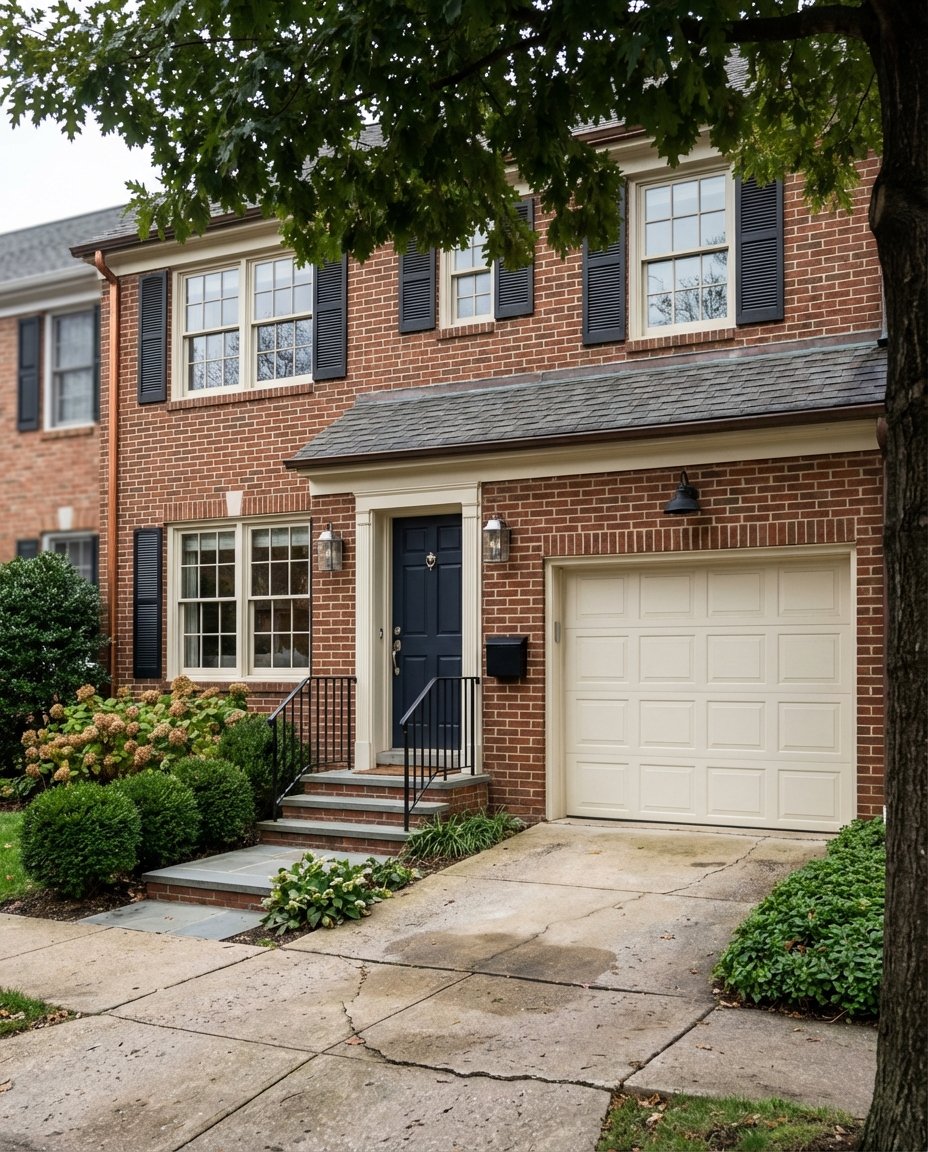
You want the space of a single-family home with a low-maintenance feel and a prime Northern Virginia location. An Arlington townhome can be a smart middle ground if you value walkability, garage parking and an easy commute. In this guide, you’ll learn what your budget buys, how layouts typically live, what HOA or condo fees cover, and how parking and transit shape daily life. Let’s dive in.
What your budget buys in Arlington
Arlington townhomes often list and sell from the mid $700Ks into the low $1 millions, with prices varying by neighborhood, size and whether the home is an end unit. Countywide medians for townhomes are commonly in the high $600Ks to high $700Ks, with prime Metro corridors like Ballston, Clarendon, Courthouse, Rosslyn and National Landing commanding the higher end. Forecasts point to modest appreciation into 2026, so plan for a competitive but steady market that rewards well-prepared buyers. For precise pricing, rely on neighborhood-level comps and recent sales.
Arlington’s adopted real estate tax rate is about $1.033 per $100 of assessed value. The county reports modest assessment increases and an average residential assessment in the high $800Ks for 2026, so be sure to budget your annual tax bill against the current assessment and adopted rate. You can review the county’s rate and budget context on the official site in the Arlington County budget overview.
Budget tips to get it right
- Add HOA or condo dues, homeowners insurance and reserves for maintenance to your monthly cost.
- Include property taxes using the assessed value and the current county rate.
- Set aside a buffer for potential special assessments if the association’s reserves are thin.
- Compare multiple recent sales in the same community to anchor your offer strategy.
Common townhome layouts and features
Arlington townhomes typically stack space vertically across three or four levels. You’ll often see a ground-level entry with a one-car or tandem two-car garage, a main level with an open kitchen, dining and living area, and upper floors with bedrooms and laundry. Many newer infill builds add a fourth-level loft or rooftop terrace for flexible work or media space.
Garage and storage specifics
You’ll find front-load, side-load and rear or alley-loaded garages throughout Arlington. Rear-loaded designs are common in newer, walkable communities and often use tandem parking. If vehicle storage matters to you, confirm garage length and width, ceiling clearance and EV-charger readiness. Ask whether outlets, amperage and panel capacity support Level 2 charging.
Outdoor space options
Outdoor living usually comes as a rooftop terrace, a small rear patio, or a compact fenced yard. End units can feel brighter and may offer a slightly larger side yard or extra windows. Decide if you prefer a private yard for pets and grilling or a rooftop for entertaining with views.
Stairs and day-to-day living
Vertical living is part of the townhome experience. If you want less stair time, look for laundry on the bedroom level and a layout with fewer half-level transitions. Some newer luxury townhomes include an elevator, but that feature is less common and should be confirmed in the listing details.
HOA, condo and fee basics in Virginia
A townhome in Arlington can be fee-simple or part of a condominium regime. Fee-simple usually means you own the land and structure and shoulder more exterior maintenance. Townhomes in a condominium regime typically pay higher dues that cover more building or community services. Always confirm the legal form in the recorded documents, since it affects maintenance, insurance and financing.
Townhome dues vary widely across Arlington. Many communities fall in a modest range, roughly $0 to $300 per month, depending on what’s included. Associations may cover common-area landscaping, snow removal, trash, exterior insurance, reserve funding and, in some cases, amenities like a pool. Ask for line-item budgets so you know exactly what you’re paying for.
The must-review association documents
Before you finalize your offer, request and review:
- Bylaws and CC&Rs
- Current operating budget and most recent reserve study
- The last 12 to 24 months of meeting minutes
- Master insurance policy and deductibles
- A list of any recent or pending special assessments
- Owner-occupancy ratio and any litigation disclosures
Virginia law provides a framework for common-interest resale disclosures. Make sure the seller provides the required package or resale certificate consistent with Virginia’s common-interest statutes.
Parking, permits and the transit lifestyle
Parking for Arlington townhomes typically includes one of four setups: an attached garage, a short private driveway, assigned surface spaces, or block-level on-street parking. Confirm exactly how many spaces convey, whether any are tandem, and how guest parking works. If you rely on a larger SUV, measure the garage and verify clearance before you write an offer.
Residential Permit Parking basics
Many walkable, Metro-adjacent neighborhoods use Arlington’s Residential Permit Parking program to manage on-street demand. Households can obtain permits and FlexPasses, and the number you can hold often depends on whether your home has off-street parking. Visitor passes and short-term options are available. Review the details and eligibility on the county’s Residential Permit Parking page.
Parking minimums near transit
Arlington has adjusted zoning and parking minimums near premium transit. Some properties close to Metro or frequent bus lines require fewer off-street spaces. If you expect two guaranteed off-street spots, confirm the unit’s specific entitlement and recorded parking allocation. For policy context, see the county’s update on zoning changes related to the “missing middle” discussion in the Arlington Newsroom.
Commute and neighborhood walkability
Townhomes around Ballston, Clarendon, Courthouse and National Landing offer strong walkability, restaurants and fast Metro access, which is ideal if you split your week between the office and home. Explore what daily life feels like in these corridors on the Ballston neighborhood overview. Local research shows Arlington residents average about a 30-minute commute, with travel time shaped by whether you use Metro, bus or drive. For mode split and commute insights, see Mobility Lab’s findings on how Arlington residents travel to work.
Townhomes vs condos vs detached homes
Ownership and maintenance: Fee-simple townhomes often give you more control over exterior decisions and may have lower dues than condos because you maintain more of the structure yourself. Condominiums typically carry higher dues to fund building systems, master insurance and shared amenities. Always confirm whether a townhome is fee-simple or governed as a condo.
Financing: Lenders treat fee-simple townhomes similarly to detached homes. Condos, however, are subject to project-level underwriting that reviews reserves, special assessments and deferred maintenance. If you plan to use FHA or certain conventional products, check project eligibility early. For a clear overview of condo project approval and loan options, review this summary of HUD and agency condo requirements.
Resale: In Arlington, townhomes often appeal to move-up buyers and households that want more space plus a garage without jumping to a detached home. Condos tend to draw first-time buyers and those who want the lowest-maintenance lifestyle. Liquidity and price trajectory depend on neighborhood, age, finishes and parking.
Quick buying checklist for Arlington townhomes
- Price check: Review neighborhood comps and confirm where the home sits relative to recent sales. Cross-check market direction in the NVAR regional forecast.
- Taxes: Calculate your annual property taxes using the assessed value and the current county rate from the Arlington budget page.
- Legal form: Verify fee-simple vs condo in the recorded documents and how it affects maintenance and insurance.
- Dues and reserves: Confirm monthly or quarterly HOA/condo fees, what they cover and whether reserves are healthy.
- Documents: Read bylaws, CC&Rs, budget, reserve study, meeting minutes and the resale certificate per Virginia law.
- Layout fit: Count the number of levels, locate the laundry, and decide if rooftop or a small yard better fits your lifestyle.
- Garage and EV: Measure for your vehicles and verify outlet capacity for charging.
- Parking rules: Confirm assigned or deeded spaces and check on-street permit eligibility with the RPP program.
- Transit trade-offs: Balance walkability and Metro access against price and parking minimums near transit. See policy context in the Arlington Newsroom update.
- Financing: If using FHA or a loan that requires condo project approval, confirm eligibility early with your lender. Review condo approval basics.
Buying a townhome in Arlington is about fit: the right layout across multiple levels, a fee structure that supports long-term maintenance, and a location that shrinks your commute without sacrificing parking. If you want a curated, low-stress path from search to closing, connect with a local advisor who knows the micro-neighborhoods and association dynamics.
Ready to explore the best Arlington townhomes for your lifestyle and budget? Reach out to Diana Foster Real Estate for a tailored search, neighborhood guidance and a seamless, concierge experience.
FAQs
How much are HOA fees for Arlington townhomes?
- Fees vary widely by community and what is covered, but many townhome HOAs fall in a modest monthly range, while condo-governed townhomes that include more services may run higher. Always review the budget and reserve study.
What parking comes with an Arlington townhome?
- Many townhomes include at least one garage space, sometimes tandem, plus a short driveway or assigned surface space. On-street parking in some areas requires Residential Permit Parking permits, so confirm rules with the county and the association.
How do Arlington property taxes affect my payment?
- The county’s real estate tax rate is about $1.033 per $100 of assessed value. Multiply the assessed value by the rate to estimate your annual bill and include it in your monthly housing budget.
Are Arlington townhomes good for commuting to D.C.?
- Yes. Townhomes near Ballston, Clarendon, Courthouse and National Landing offer strong walkability and quick Metro access. Arlington residents average around a 30-minute commute, depending on mode and location.
What HOA documents should I review before buying?
- Ask for bylaws and CC&Rs, the current budget and reserve study, recent meeting minutes, the master insurance policy, and any special assessment disclosures. Virginia requires a resale package for common-interest communities, so review it carefully.