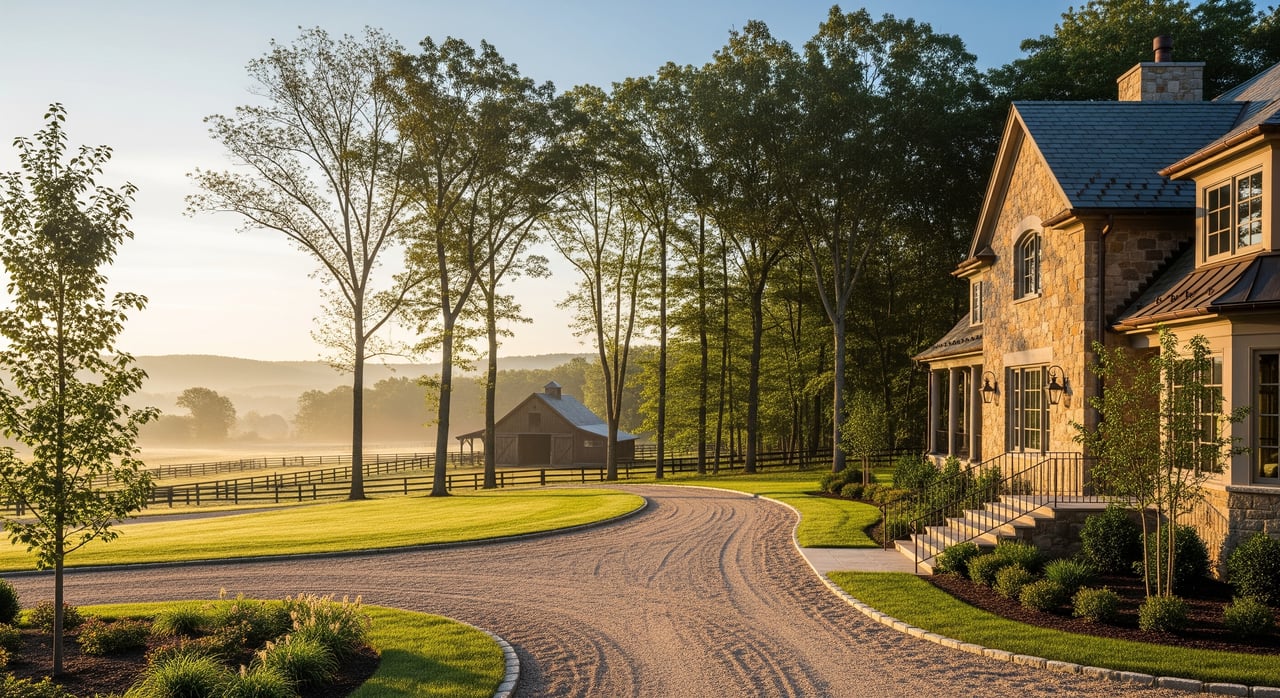
Craving more space, tree cover, and quiet than a typical Northern Virginia suburb offers? Great Falls draws you in with wooded lots, winding drives, and room to spread out. If you are weighing a move from closer-in neighborhoods, you probably want that privacy without losing access to Tysons or DC. This guide shows you what daily life on acreage really looks like, the tradeoffs to expect, and the key checks to make before you buy. Let’s dive in.
What “acreage” means in Great Falls
In Great Falls, properties marketed as acreage often start around one acre and scale up to multi-acre estates. You will find custom builds, long-established homes with mature trees, and newer luxury construction on subdivided parcels. Topography varies, so two lots with the same square footage can feel very different once you factor in slopes, woods, and usable lawn.
Zoning and environmental overlays shape what you can do on a property. Minimum lot sizes, accessory structures, and setbacks are regulated, and some parcels near streams or the Potomac have conservation or floodplain constraints. If you want a barn, pool house, or future addition, plan to check zoning, setbacks, and any conservation easements before you move forward.
Daily life on a large lot
Grounds and trees
Large lots look beautiful because someone is caring for them. Routine work includes mowing, leaf removal, trimming, and bed maintenance. Mature trees need periodic pruning and storm-readiness checks by certified arborists, and removal can be a significant expense. On sloped parcels, erosion and drainage projects are common and sometimes recurring.
If you want polished grounds, you will likely hire landscapers and tree professionals. Doing it all yourself is possible, but it takes time and equipment. Many owners schedule seasonal visits for pruning and post-storm assessments to stay ahead of issues.
Driveways, snow, and fences
Long driveways need attention. Gravel needs replenishing, paved sections can require sealing, and gates or stone pillars need upkeep. In winter, plan for snow removal on your driveway, not just on public roads. Some owners buy a small plow or snow blower; others set up a plowing contract before the first storm.
Fences and gates are part of the routine too, especially if you keep pets or horses. Walk your perimeter a few times a year to spot repairs early.
Wildlife and pests
You will see deer, foxes, turkeys, and other wildlife, and sometimes hear coyotes at night. Protect gardens and young trees from browsing, and secure compost or small livestock. Wooded areas can have ticks, so use prevention and do quick checks after yard time, especially in warm months.
Home systems to understand
Septic and wells
Many larger-lot homes use private septic systems and wells. These require regular maintenance, including scheduled septic pumping and periodic well service and testing. System capacity can limit how many bedrooms you can add in the future, so understanding type, age, permits, and service records matters.
Before you buy, confirm the last septic inspection and pumping, review any well yield or water quality test results, and check county records. If public water or sewer runs nearby, verify whether connection is possible and what it would cost. Conversions are not always practical in every part of Great Falls.
Power, internet, and backups
Power lines are often overhead, and tree-related outages can be more frequent than in dense urban areas. Many acreage owners consider a standby generator or portable backup for peace of mind. Internet can vary by address; fiber or cable may not reach every road. If wired service is limited, alternatives can include fixed wireless, cellular-based home internet, or satellite.
Test cellular coverage on site and confirm provider options early in your search. Reliable connectivity is a real quality-of-life factor if you work from home.
Trash, recycling, and deliveries
Trash and recycling are available for much of Fairfax County, but some rural stretches use private haulers. Confirm service type, pickup days, and any HOA rules if applicable. For deliveries, make sure your address is clearly marked and there is adequate turnaround space on long or narrow driveways.
Lifestyle, privacy, and community
Outdoor hobbies and equestrian use
Acreage supports the outdoor lifestyle that draws many buyers to Great Falls. You will find equestrian-friendly parcels, barns, and trail access, plus space for gardening, small orchards, or hobby farming. If you plan to keep animals or add accessory structures, check county regulations and any neighborhood rules first.
Privacy and noise
Setbacks and tree buffers deliver real privacy compared with closer-in neighborhoods. You can enjoy a pool or patio without feeling on display, and street noise is typically lower. That said, full privacy is not guaranteed. Leaf loss in winter changes sightlines, and neighboring properties with barns or generators can create intermittent noise. If privacy is a priority, visit properties in different seasons and at different times of day.
Community culture
Great Falls has an active civic culture with groups focused on land preservation, trails, and community character. Some neighborhoods have voluntary or formal HOAs that set expectations for property appearance or shared amenities. You will find a neighborly respect for privacy and well-kept grounds across many estate areas.
Commute and access
Driving and transit
Great Falls is primarily car-dependent. Daily commutes often run toward Tysons, Arlington, Fairfax, or DC, and peak-hour congestion is common on major corridors. Public transit access is limited, so many residents drive to nearby Metrorail stations or commuter lots. If the commute matters to you, drive it at peak times from the specific address you are considering.
Emergency and essential services
Response times can vary in estate areas compared with urban neighborhoods. Confirm typical response coverage for fire and rescue and understand access needs for long, gated, or shared driveways. Make sure house numbers and driveway markers are visible from the road.
Costs, insurance, and resale
Ongoing costs and insurance
Property taxes are assessed by Fairfax County, and land value on larger parcels influences the bill. Insurance needs may be higher for pools, barns, ponds, or equestrian uses, including liability considerations. Some parcels carry conservation easements that limit development but can offer tax benefits; understand how any easement or covenant aligns with your long-term plans.
Resale and market dynamics
Privacy, lot size, and proximity to regional job centers are consistent demand drivers in Great Falls. Well-documented maintenance, from septic records to tree care and utility upgrades like a generator or high-speed internet, can boost buyer confidence. Very large or highly customized estates can command premiums, but they may appeal to a narrower pool of buyers, which can influence time on market.
What to verify before you buy
Before you buy, verify:
- Exact lot size, survey, and topography, including slopes and usable areas.
- Zoning classification, setbacks, and any overlays, such as floodplain or conservation.
- Septic and well details, including type, permits, age, inspections, and service history.
- Options and costs for public water or sewer connection, if available.
- Address-level internet and cellular coverage; test on site.
- Tree health assessment and any history of removals or storm damage.
- Driveway access, easements, shared maintenance, and snow removal plans.
- Local school assignments using official boundary maps; verify service providers like trash and recycling.
- Insurance requirements, including any special inspections or exclusions.
- Property tax assessment history, HOA or architectural rules, and any special tax districts.
- Flood risk using official maps, plus any known high-water or drainage history on the lot.
Smart next steps
Walk the property with specialists, not just a general inspector. Line up a septic professional, well contractor, and arborist for early estimates. Drive your actual commute, check phone and internet performance in person, and visit at different times of day and in different seasons.
If acreage living in Great Falls fits your goals, you want a locally grounded, concierge-style advocate who knows how to surface the right options and manage the moving parts. From pre-offer due diligence to curated introductions to reputable local resources, you can navigate the tradeoffs with clarity and confidence. Start a conversation with Diana Foster Real Estate to explore available and pre-market acreage, align your timeline, and buy with a plan.
FAQs
What should I know about wells and septic on Great Falls acreage?
- Many larger-lot homes use private systems that need regular service; review permits, capacity, and inspection records, and budget for ongoing maintenance.
How reliable is internet service on Great Falls estates?
- Availability varies by address; verify wired providers early and consider fixed wireless, cellular-based home service, or satellite if fiber or cable is limited.
How does the Great Falls commute compare to closer-in suburbs?
- The area is car-dependent, with common peak-hour congestion; many residents drive to nearby Metro stations or commuter lots for rail access.
What wildlife issues should I expect on a wooded lot?
- Deer and small mammals are common and can affect landscaping; ticks are present in wooded areas, so use prevention and do quick checks after time outdoors.
Are large driveways and private roads hard to maintain in winter?
- Plan for snow removal on your own driveway and set up a plowing solution in advance; long or steep drives benefit from proactive grading and de-icing.
Do conservation easements limit what I can build on acreage?
- Easements can restrict development or location of structures; review any recorded easement and zoning rules to confirm feasibility for additions or accessory buildings.