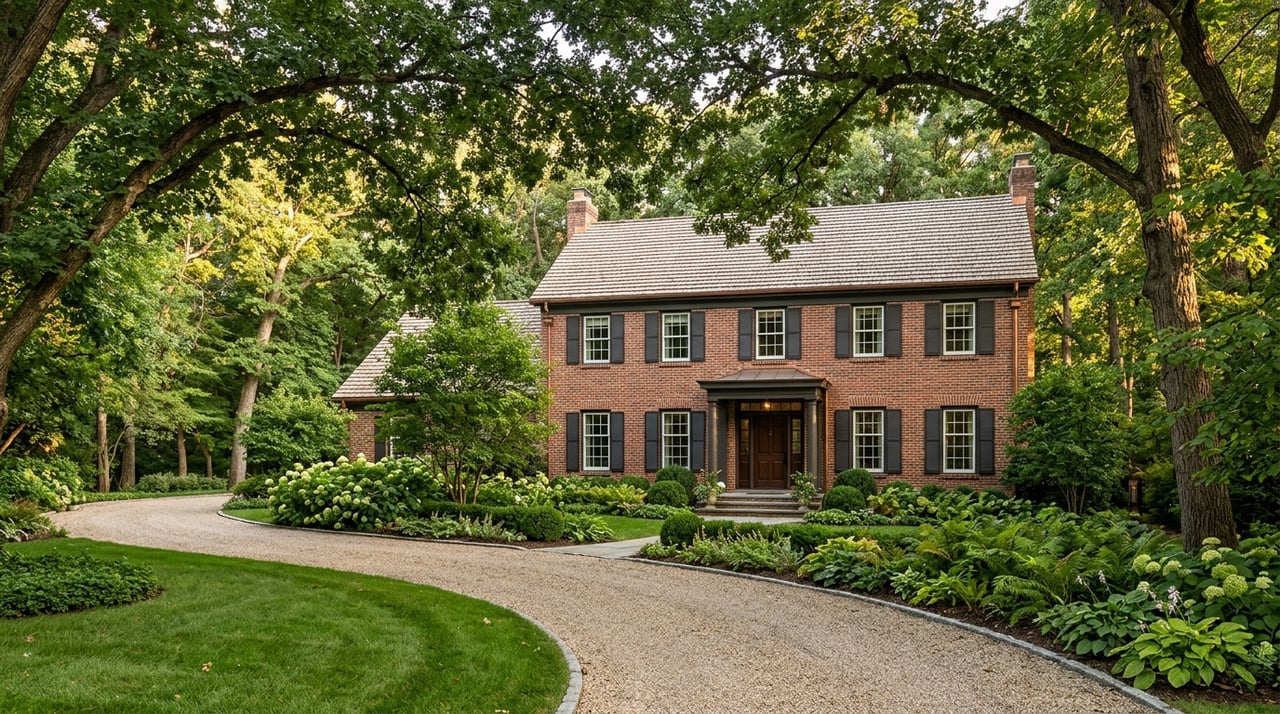
If you are searching for a single-family home in Oakton, one of the first things you may notice is that Oakton does not read like one uniform neighborhood. Instead, it offers a range of detached-home settings, from classic cul-de-sac communities to wooded properties with more separation and newer custom-style enclaves. Understanding those patterns can help you focus your search, compare options more clearly, and choose the kind of neighborhood experience that fits your goals. Let’s dive in.
Why Oakton Feels Different
Oakton is best understood as a low-density detached-home market rather than one master-planned subdivision. Fairfax County planning materials describe much of the area as low-density residential, typically under one unit per acre, with especially large-lot single-family homes west and northwest of Jermantown Road.
That matters because your home search in Oakton is often less about finding one “best” neighborhood and more about identifying the right pattern of living. In practical terms, buyers often weigh lot size, home age, privacy, road access, and the level of neighborhood uniformity.
Public portal snapshots place Oakton detached-home pricing in the mid-$1 millions, while the broader Oakton market trends lower because it also includes townhouses and condos. If you are only looking at single-family homes, it helps to separate the detached market from the rest of the local housing mix.
Oakton’s Main Neighborhood Types
Classic cul-de-sac neighborhoods
If you picture established suburban streets, mature trees, and homes built over several decades, this is the Oakton many buyers first imagine. Communities such as Valewood Manor, Waples Mill Estates, and Vale Spring Woods reflect that classic pattern.
Valewood Manor dates from 1967 to 1986 and typically includes homes from about 1,745 to 2,909 square feet, often with very low or no HOA fees. Waples Mill Estates dates from 1975 to 1987 and shows a wider size range, about 2,075 to 5,254 square feet, with HOA dues around $75 to $105. Vale Spring Woods dates from 1965 to 1972 and typically offers homes around 2,479 to 3,165 square feet on lots up to one acre.
These neighborhoods can appeal if you want a settled street pattern and a more familiar suburban feel without stepping into full estate-style living. Many buyers also like that homes in these areas may already reflect several rounds of updates, even though the original construction dates are older.
Wooded and estate-style enclaves
Another side of Oakton leans more private and more wooded. Neighborhoods including Miller Heights, Foxvale, Oakton Hills Estates, Wendover Oaks, Silkwood, and Willow Oaks show this larger-lot, more tucked-away pattern.
Miller Heights spans roughly 0 to 3 acres, with homes built from 1967 through 2011. Foxvale includes homes from 1977 to 1992 on 0 to 1 acre lots with modest HOA dues. Oakton Hills Estates is a newer 2007 enclave on one-acre lots, while Wendover Oaks and Silkwood feature larger custom-style homes from the 1990s and 2000s. Willow Oaks is listed with homes around 5,970 to 7,600 square feet.
If privacy matters to you, this part of Oakton often comes closest to the idea of a wooded retreat. Longer driveways, more distance between houses, and lot value that plays a major role in overall appeal are common themes suggested by the lot-size and age patterns.
Newer and expanded homes
A smaller share of Oakton’s detached-home inventory falls into the newer or heavily expanded category. These properties often stand out for larger floor plans, more current layouts, and a more custom presentation.
Oakton Ridge Estates is reported from 2000 to 2001, with homes ranging from about 4,205 to 7,550 square feet. Silkwood also fits this conversation, with homes from 1988 to 2002 and sizes roughly from 4,238 to 6,888 square feet.
For buyers who want a newer-feeling home in Oakton without leaving the detached-home market, these neighborhoods can be worth watching. They often blend Oakton’s established setting with more recent square footage and design priorities.
How to Compare Oakton Neighborhoods
Start with lot size
Lot size shapes daily life in Oakton more than many buyers expect. In some neighborhoods, you may find more conventional lots and closer visual connection to nearby homes. In others, especially wooded enclaves, the lot itself becomes a major part of the purchase decision.
If you want manageable outdoor space and a more predictable neighborhood rhythm, classic subdivisions may be the better fit. If you want privacy, a longer setback, or more of a tucked-away feel, larger-lot areas may deserve more attention.
Look at home era and renovation level
Oakton has a wide architectural mix, including Colonial Revival, Craftsman, Tudor Revival, New Traditional, split-level, ranch, farmhouse, Georgian, and contemporary Craftsman influences. That means Oakton is less defined by one signature style and more by the relationship between era, lot size, and renovation level.
Older subdivisions often provide the most consistent street feel and lot geometry. Later 1990s and 2000s enclaves tend to offer larger footprints and a more custom-home presentation.
If you are comparing two homes with similar square footage, the bigger difference may be the setting and the level of updating rather than the style label alone. That is especially true in Oakton, where architectural variety is part of the market’s character.
Check HOA assumptions carefully
One common mistake is assuming Oakton neighborhoods follow one standard HOA pattern. They do not. Some communities show no HOA or only minimal fees, while others have quarterly or monthly dues.
Before you narrow your list, it is worth confirming what applies to the specific neighborhood and property you are considering. HOA structure can affect both monthly carrying costs and the overall ownership experience.
Commute Access Matters in Oakton
Focus on road corridors
Many Oakton buyers compare neighborhoods based on access to Route 123, Hunter Mill Road, Miller Road, Jermantown Road, Route 50, and I-66. Those corridors help shape both commute convenience and day-to-day errands.
If your priority is quicker access in and out of Oakton, corridor-adjacent streets may stand out. If you prefer a more tucked-away setting, you may trade some convenience for more privacy and separation.
Understand local congestion points
Fairfax County’s Oakton congestion and safety study identifies the Hunter Mill Road, Miller Road, and Chain Bridge Road area as a major congestion point. The same study notes that Oakton Elementary drop-off traffic can back up onto Miller Road.
For some buyers, those details may not be a deal breaker. Still, they are useful to know because circulation patterns can shape how a neighborhood feels at specific times of day.
The county study also found that the Chain Bridge Road crossings it evaluated were uncomfortable or unmarked for pedestrians. That is another reason it helps to think about not just distance on a map, but how you expect to move through the area in everyday life.
Amenities That Influence Neighborhood Choice
Parks and trails
Oakton offers a strong park and recreation base. Nottoway Park includes trails, tennis, basketball, volleyball, athletic fields, picnic areas, and the Hunter House historic mansion.
The Gerry Connolly Cross County Trail connects into Oak Marr, now renamed Oakmont, and links with several nearby parks. Oakmont Rec Center and Golf Center are located on Jermantown Road, and county materials note the 2023 renaming of the Oak Marr facilities to Oakmont, even though some references may still use the older name.
For many buyers, nearby parks and trails add value to the neighborhood experience even if they are not the main reason for the move. These amenities can help distinguish one part of Oakton from another when homes seem otherwise similar on paper.
Library and daily-use amenities
The Oakton Library branch on Lynnhaven Place is another practical amenity that factors into location decisions. When you are comparing neighborhoods, convenience is not only about commute time. It is also about how easily your preferred daily destinations fit into your routine.
School Boundary Planning
For school planning, Fairfax County Public Schools places Oakton in Region 1, and the Oakton ES, Waples Mill ES, and Oakton HS pages direct families to boundary-locator tools. The key takeaway is simple: school assignment is address-specific.
That means you should avoid assuming that every home in a named Oakton neighborhood connects to the same school path. If school assignment is part of your decision, verify it for the exact address before you move forward.
A Simple Way to Think About Oakton
For many buyers, the clearest way to understand Oakton is as a spectrum.
At one end are classic cul-de-sac subdivisions with mature trees and manageable lots, such as Valewood Manor, Waples Mill Estates, and Vale Spring Woods. In the middle are established neighborhoods with larger homes and a wide range of renovation levels. At the other end are private wooded properties and newer custom estates, such as Miller Heights, Foxvale, Oakton Hills Estates, Wendover Oaks, Silkwood, and Willow Oaks.
That framework can make your search feel more manageable. Instead of trying to memorize every neighborhood name first, you can start by deciding which version of Oakton living fits you best.
If you want help narrowing Oakton’s single-family options by neighborhood feel, lot size, commute access, or home style, Diana Foster Real Estate can guide you with a local, thoughtful approach tailored to your move.
FAQs
What types of single-family neighborhoods are available in Oakton?
- Oakton generally offers classic established subdivisions, wooded and estate-style enclaves, and a smaller group of newer or expanded custom homes.
Which Oakton neighborhoods fit a classic suburban feel?
- Valewood Manor, Waples Mill Estates, and Vale Spring Woods are often useful examples of Oakton’s classic cul-de-sac neighborhood pattern.
Which Oakton neighborhoods offer more privacy and larger lots?
- Miller Heights, Foxvale, Oakton Hills Estates, Wendover Oaks, Silkwood, and Willow Oaks are commonly associated with more privacy, larger lots, and a more wooded setting.
How important is commute access when choosing an Oakton neighborhood?
- Commute access matters for many buyers because Oakton neighborhoods are often compared by proximity to Route 123, Hunter Mill Road, Miller Road, Jermantown Road, Route 50, and I-66.
Do all Oakton single-family neighborhoods have the same HOA structure?
- No. Some Oakton communities show no HOA or very low fees, while others have quarterly or monthly dues, so each neighborhood should be checked individually.
Are Oakton school assignments the same across every neighborhood?
- No. Fairfax County Public Schools notes that school assignment is address-specific, so you should verify boundaries for the exact property you are considering.