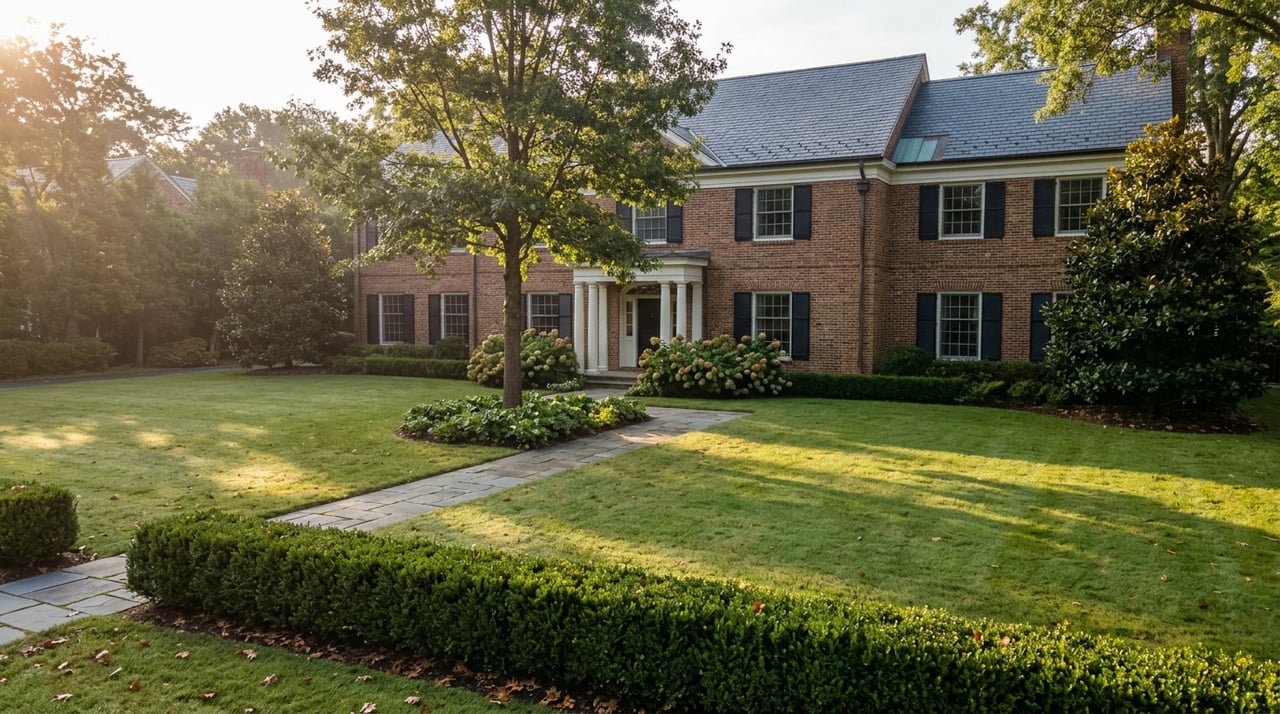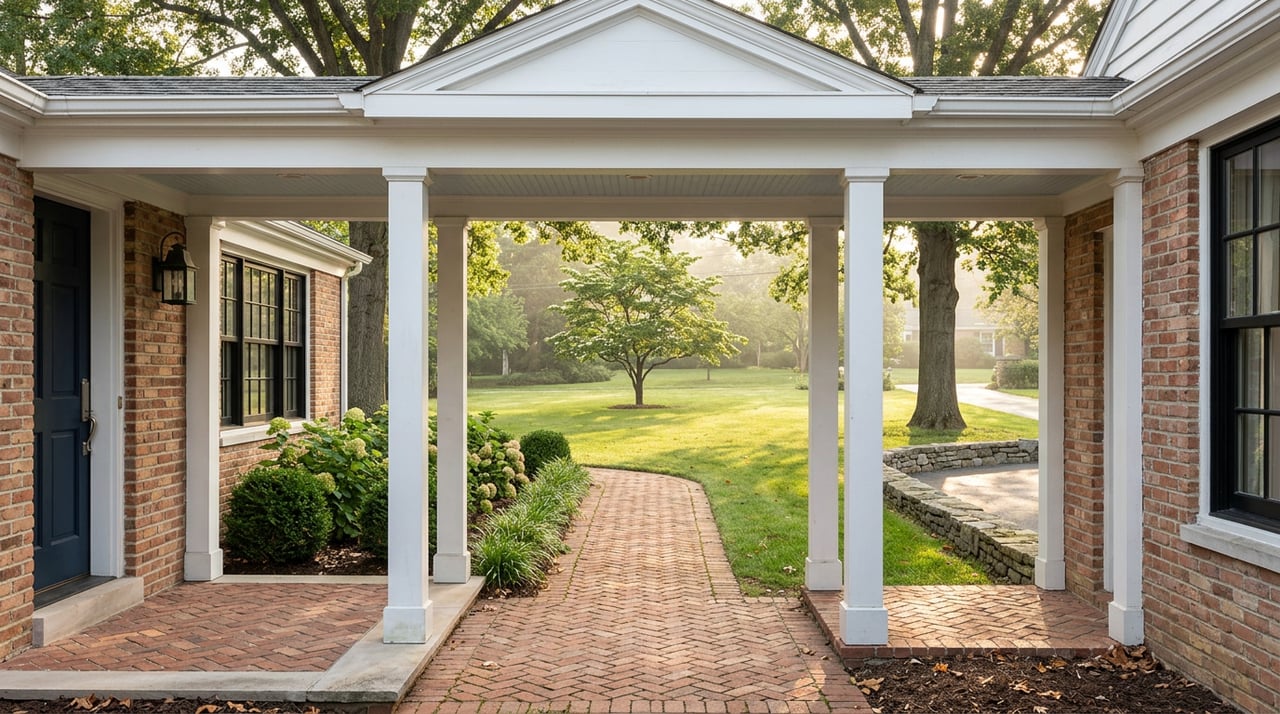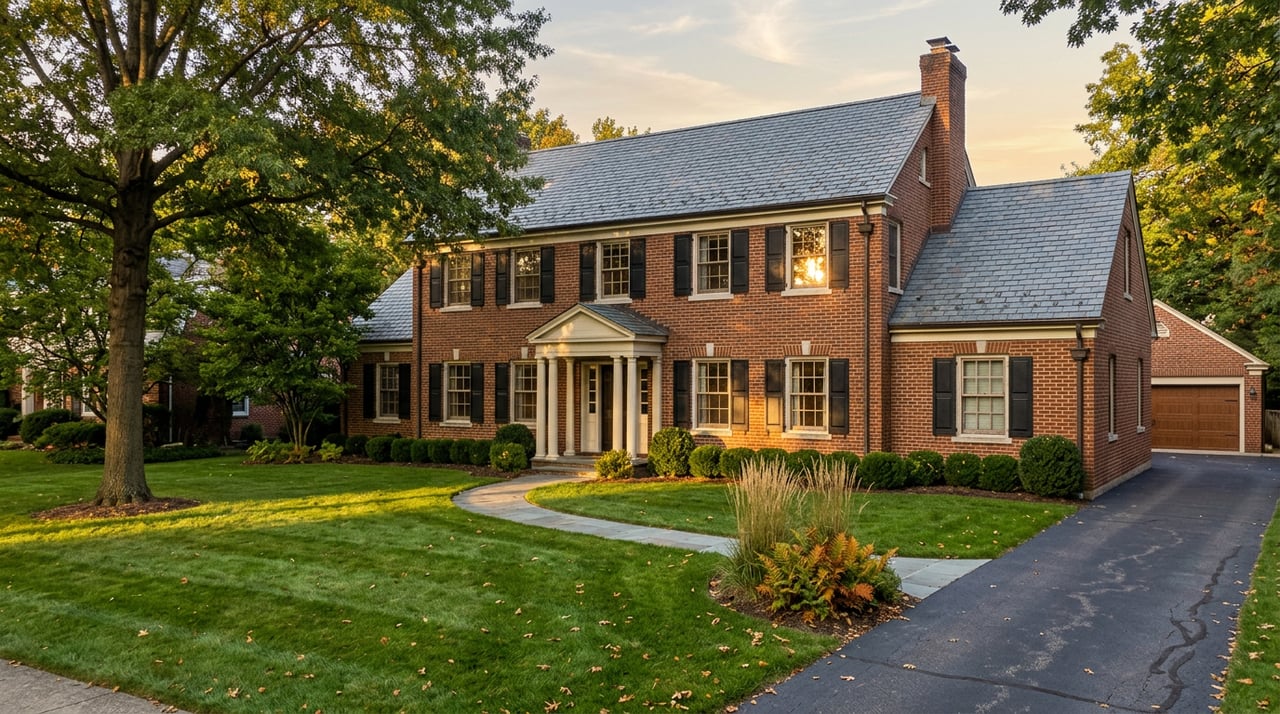
Picture two Vienna listings, both under $1.3 million, both inside the town's zip codes, both showing up in the same portal search this week. One is a fully renovated four-bedroom with a new kitchen and a finished basement. The other is a 1962 rambler on a flat, wide lot that hasn't been touched since the Ford administration. On paper they look like competitors. In practice, they are barely in the same business.
The renovated home is competing against other move-in-ready resales. The rambler is competing against a builder's spreadsheet. And that difference is the reason Vienna's much-quoted median price tells you almost nothing about what you'll actually pay for a specific house on a specific street.
The Same Zip Codes, Two Different Products
Vienna's housing stock still carries the fingerprints of its postwar building boom: modest ranches and capes on generous lots, laid out when land was cheap and lots were wide. Decades later, those same lots have become the raw material for a very active teardown-and-rebuild market. Builders including Sekas Homes, Luka Design and Build, Oakview Homes, Verity Builders, and JDA have recent projects on streets like Marshall Road, Roberts Drive NW, Lakewood Drive SW, and Orrin Street SE, replacing older homes with new construction that typically lists somewhere between $1.85 million and $3.5 million once finished.
One builder active in town, Paramount Construction, markets itself around exactly this pattern: it says it tracks more teardown opportunities in Vienna than anyone else, and points to more than 700 completed home plans across three decades of building specifically in this market. That is not a side business. It is a primary channel through which older Vienna inventory turns over.
Here is the split in plain terms:
| Resale Market | Teardown / Lot-Value Market | |
|---|---|---|
| Typical age | Updated or well-maintained homes, often 1970s to 2000s | Original 1950s-60s ranches and capes, largely unrenovated |
| What actually sets the price | Condition, layout, finish quality | Lot width, depth, topography, and how much house the town's 25 percent lot coverage cap allows |
| Recent price signal | Redfin's trailing three-month window ending July 2026 puts Vienna's median sale price at $1.5 million | Land frequently changes hands well under $1 million, priced for what can be built, not what's standing |
| What eventually replaces it | Nothing, the buyer moves in as-is | New construction on the same lot, commonly listing between $1.85 million and $3.5 million |
A buyer scrolling listings sees one price column. What they're actually looking at is two separate pricing logics that happen to share a zip code.
Why the Portals Don't Agree With Each Other
If you've cross-checked Vienna's median price across a few sites, you've probably noticed the numbers don't line up. Zillow's home value index put the average Vienna home at $1,176,798 as of July 31, 2026, up about 1 percent over the year, with homes typically going to pending in around eight days. Redfin, looking at actual closed sales over the three months ending July 2026, reported a median sale price of $1.5 million, with homes selling in an average of 21 days.
That gap isn't a disagreement about Vienna. It's a difference in what each number is counting. A home value index smooths across the entire housing stock, including older homes that rarely trade. A trailing median sale price only reflects whatever actually closed in that window, and in a market where a meaningful share of transactions are finished new construction or fully renovated resales, that closed-sale median skews upward. When a wave of $2 million-plus new builds closes in a given month, the median jumps, not because Vienna homes broadly got more expensive, but because the mix of what sold changed.
This matters for a buyer doing math on a shortlist. The "median" you see quoted depends entirely on which basket of transactions the source happened to be counting that month, and in a market running two parallel product lines, that basket shifts constantly.
The Math Builders Are Already Running
The teardown side of this market isn't casual. A canopy study the town has cited puts the pace of teardown-rebuilds at roughly 100 homes a year, on lots that typically run 10,000 to 12,000 square feet and are capped at 25 percent lot coverage. That coverage limit is the real ceiling on what a builder can put on a given piece of land, and it's why lot dimensions, not the house currently sitting there, drive the offer.
Two features consistently move the number a builder is willing to pay. A lot with more than 80 feet of frontage allows a side-load garage, which adds real value because it changes the buildable footprint. Flat, easily buildable topography also commands a premium, since a sloped lot can add tens of thousands of dollars in retaining walls and stormwater management before a foundation is even poured. A seller who assumes their home's condition determines their sale price, when their real audience is a builder pricing the dirt, is negotiating from the wrong playbook entirely.
The Renovation Trap Hiding Inside This
This split creates a specific and costly mistake for sellers in the upper tiers of the Vienna market. At price points where new construction is the realistic comparable, a seller who spends heavily on a renovation to compete is often fighting a battle they cannot win on the merits. The national Cost vs. Value data on upscale renovations consistently shows returns well under half of what was spent, and in a market where the next closed comp down the street might be a builder's spec home with a chef's kitchen and a primary suite built from scratch, a remodeled 1985 kitchen is rarely the thing that changes a buyer's decision.
The more useful question, before any renovation dollar is spent, is which market a given home is actually competing in. A home that is a genuine teardown candidate gains nothing from a new kitchen. Its value is in the lot, and buyers who want that lot are not paying for granite. A home that is a legitimate resale competitor benefits from targeted, defensible updates, but only the ones that match what recent comparable sales actually rewarded, not a generic renovation checklist.
What This Means If You're Comparing Two Listings
For a buyer trying to make sense of a Vienna shortlist, the practical filter is simple: figure out which product each listing actually is before comparing prices. A listing priced well under the neighborhood's typical price per square foot, sitting on a wide, flat lot, with an agent's remarks pointing toward the land rather than the interior, is very likely priced for its buildable potential, not its current condition. A listing priced in line with recent finished sales, with recent updates and move-in condition emphasized, is competing in the resale lane.
Comparing those two listings on price alone is like comparing a car's sale price to a scrapyard's price for the same make and model. Both numbers are real. They are measuring completely different things.
For sellers, the first conversation worth having with a listing agent isn't about paint colors or staging. It's about which market your specific home is actually in, because that answer determines almost everything else, from which comps matter to whether a renovation budget makes sense at all.
A Few Direct Questions
Is every older home in Vienna a teardown candidate? No. Age alone doesn't determine it. Lot width, depth, topography, and how much the town's coverage cap allows to be built are the real drivers. Two similar-looking older homes on different lot shapes can land in very different pricing conversations.
How can I tell which market a specific listing is in before touring it? Compare the list price against the price per square foot of recently finished resales nearby. A significant gap below that benchmark, paired with an unrenovated interior and a favorable lot, is a strong signal the home is being priced for its land.
Does this affect the rest of Fairfax County the same way? The mechanics vary by jurisdiction. Vienna's specific lot coverage rules and its particular mix of postwar housing stock make this dynamic unusually pronounced here compared to some neighboring markets, which is exactly why treating Vienna's median as one number can be misleading.
If you're trying to figure out which side of this market your home, or your next home, actually sits on, that's a conversation worth having before you price anything or make an offer. Diana Foster works this market street by street, and can help you read a specific listing correctly the first time.